HISTORICAL DECK · c. 1450 (MILAN)
Visconti-Sforza Tarot
Quick Answer
Hand-painted in Milan around 1450 for the Visconti and Sforza dukes (attributed to Bonifacio Bembo's workshop), the Visconti-Sforza Tarot is the oldest surviving near-complete Tarot deck in history. Illuminated in stamped gold leaf, it unites Renaissance humanism, courtly allegory, and pure Minor Arcana pip numerology.
- Era & Workshop
- c. 1450 · Milan (Workshop of Bonifacio Bembo)
- Tradition
- Italian Renaissance, humanistic, allegorical & numerological
- Best For
- Historical depth, virtues & fortune, and Renaissance visual elegance
Iconic Cards from Visconti-Sforza (c. 1450)
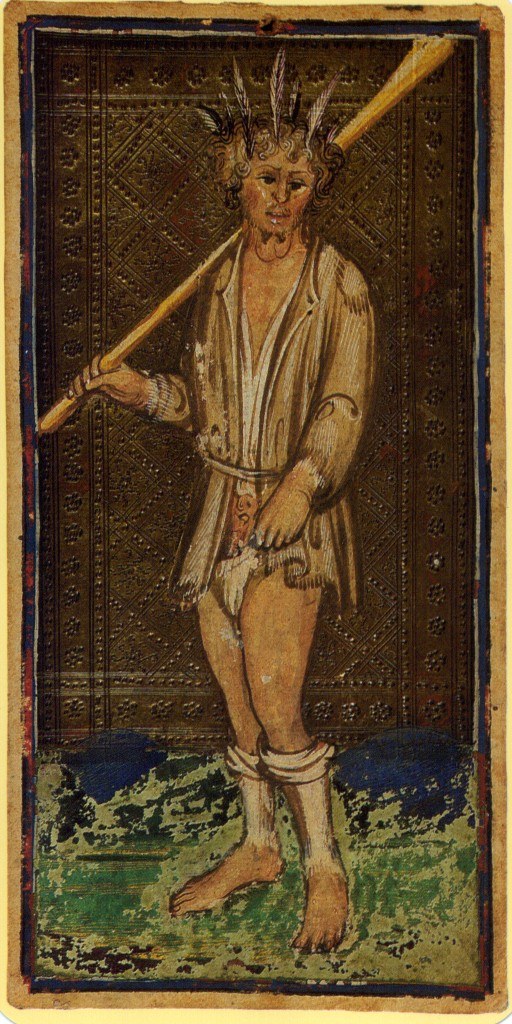
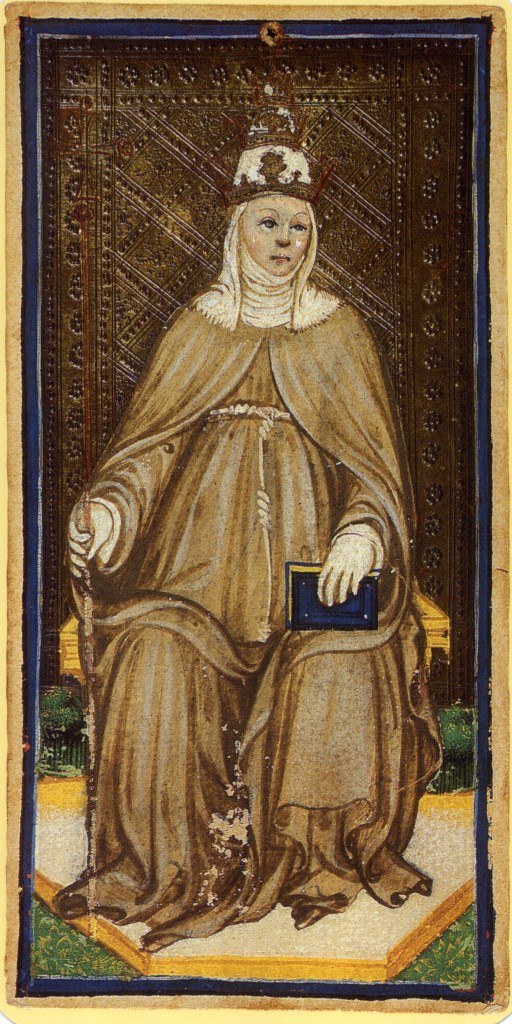
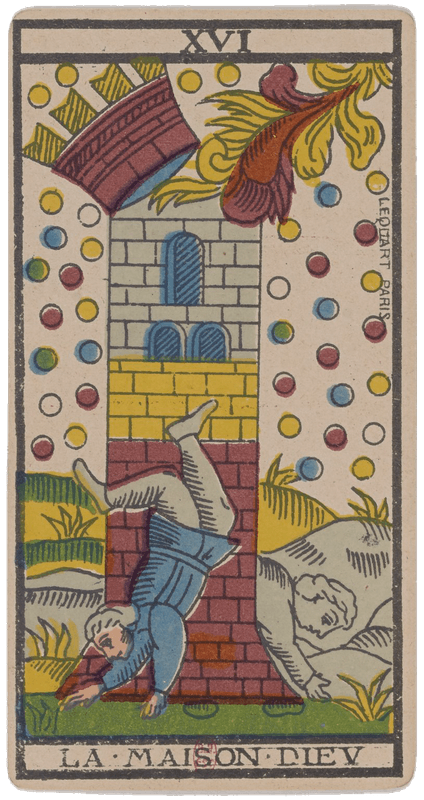
The Original Masterpiece of the Italian Renaissance
Commissioned around 1450 for the ducal court of Francesco Sforza and Bianca Maria Visconti in Milan, the Pierpont Morgan-Bergamo Visconti-Sforza deck (today preserved across the Morgan Library in New York, Accademia Carrara in Bergamo, and Casa Colleoni) marks the true artistic birth of the Tarot.
The cards carry neither printed titles nor Roman numerals: they speak through stamped gold backgrounds, heraldic motifs, and the symmetrical geometry of the four Italian suits. Over the centuries, 4 original cards (The Devil, The Tower, Knight of Pentacles, and Three of Swords) were historically lost—so Tarottino transparently completes those specific cards using the classic Tarot of Marseilles.
Core Pillars of a Visconti-Sforza Reading
- 01Titleless, unnumbered Major Arcana read through pure Renaissance allegory, posture, and courtly symbolism.
- 02Symmetrical Italian-suit pip cards interpreted through clean numerology (1–10) and elemental suit energy.
- 03Pre-occult humanist perspective centered on cardinal virtues, human agency, and the turning of Fortune.
- 04Historical transparency: the 4 centuries-lost cards (Devil, Tower, Knight of Pentacles, 3 of Swords) gracefully fall back to classic Marseilles.
How It Differs From the Other 3 Decks on Tarottino
Visconti-Sforza is the 15th-century Italian root from which European Tarot evolved. Compared to Rider-Waite (modern narrative scenes) and Oswald Wirth (19th-century French Hermeticism), it offers a luminous, pre-occult Renaissance lens on character, fate, and virtue.
Frequently Asked Questions
Why do 4 Visconti-Sforza cards (Devil, Tower, Knight of Pentacles, 3 of Swords) appear in classic Marseilles style?
How do you read the geometric Minor Arcana pips in the Visconti-Sforza deck?
Why don't Visconti-Sforza cards have printed titles or Roman numerals?
How is Visconti-Sforza different from Tarot of Marseilles?
When should I choose Visconti-Sforza on Tarottino AI?
Start a Visconti-Sforza Reading
Experience 1450 Milanese gold-leaf symbolism with Tarottino's structured 4-layer reading.
Explore the other traditions on Tarottino
1909
Rider-Waite-Smith
The most iconic modern deck, featuring detailed narrative scenes across all minor and major arcana.
17th-18th c.
Tarot of Marseilles
The historical European foundation with woodcut aesthetics, primary colors, and geometric pips.
1889
Oswald Wirth
The apex of French hermetic esotericism, infused with alchemical, kabbalistic, and masonic symbolism.